Instrumentation
Hubble Space Telescope
I had originally planned to develop a dissertation using data from the Hubble Space Telescope. However, the Challenger disaster in 1987 put an end to those plans. Still, half of my dissertation was on developing methodology for doing stellar photometry on undersampled images.
I moved to Lowell Observatory to work with Bill Baum and Deidre Hunter as part of the WF/PC Instrument Definition Team. I spend a lot of time at Goddard after the launch of HST in 1990, and was deeply involved in the diagnosis of the optical spherical aberration present in the telescope, as well as with its correction in the Wide Field Planetary Camera 2.
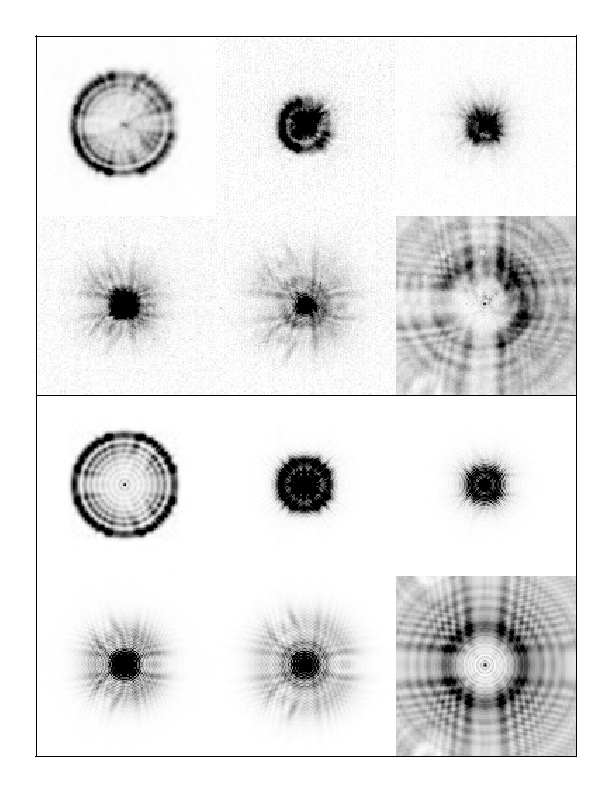 The top panel is a montage of images taken with the WF/PC on the
HST shortly after launch in 1990 at a wide range of positions of
the HST secondary mirror that provided a coarse focus run. The
bottom panel is a set of simulated images for the HST pupil function
with a half-wave of spherical aberration. These were the images
shown to HST/NASA management that firmly convinced everybody that
there was an optical issue with the as-built telescope. Despite the
disappointment at the time, working with Sandy Faber and the WF/PC
team in our offices at Bowie State Univerisity, generating pages
and pages of simulated images which we compared with observed images
to diagnose the issue, was a tremendous experience that has stuck
with me to the current day. And, of course, the HST story has a
happy ending!
The top panel is a montage of images taken with the WF/PC on the
HST shortly after launch in 1990 at a wide range of positions of
the HST secondary mirror that provided a coarse focus run. The
bottom panel is a set of simulated images for the HST pupil function
with a half-wave of spherical aberration. These were the images
shown to HST/NASA management that firmly convinced everybody that
there was an optical issue with the as-built telescope. Despite the
disappointment at the time, working with Sandy Faber and the WF/PC
team in our offices at Bowie State Univerisity, generating pages
and pages of simulated images which we compared with observed images
to diagnose the issue, was a tremendous experience that has stuck
with me to the current day. And, of course, the HST story has a
happy ending!
The experience taught me a lot about optics and the importance of understanding how the tools of a trade work. It also taught me the importance of speaking up when something doesn’t seem right!
Tortugas Mt. Observatory
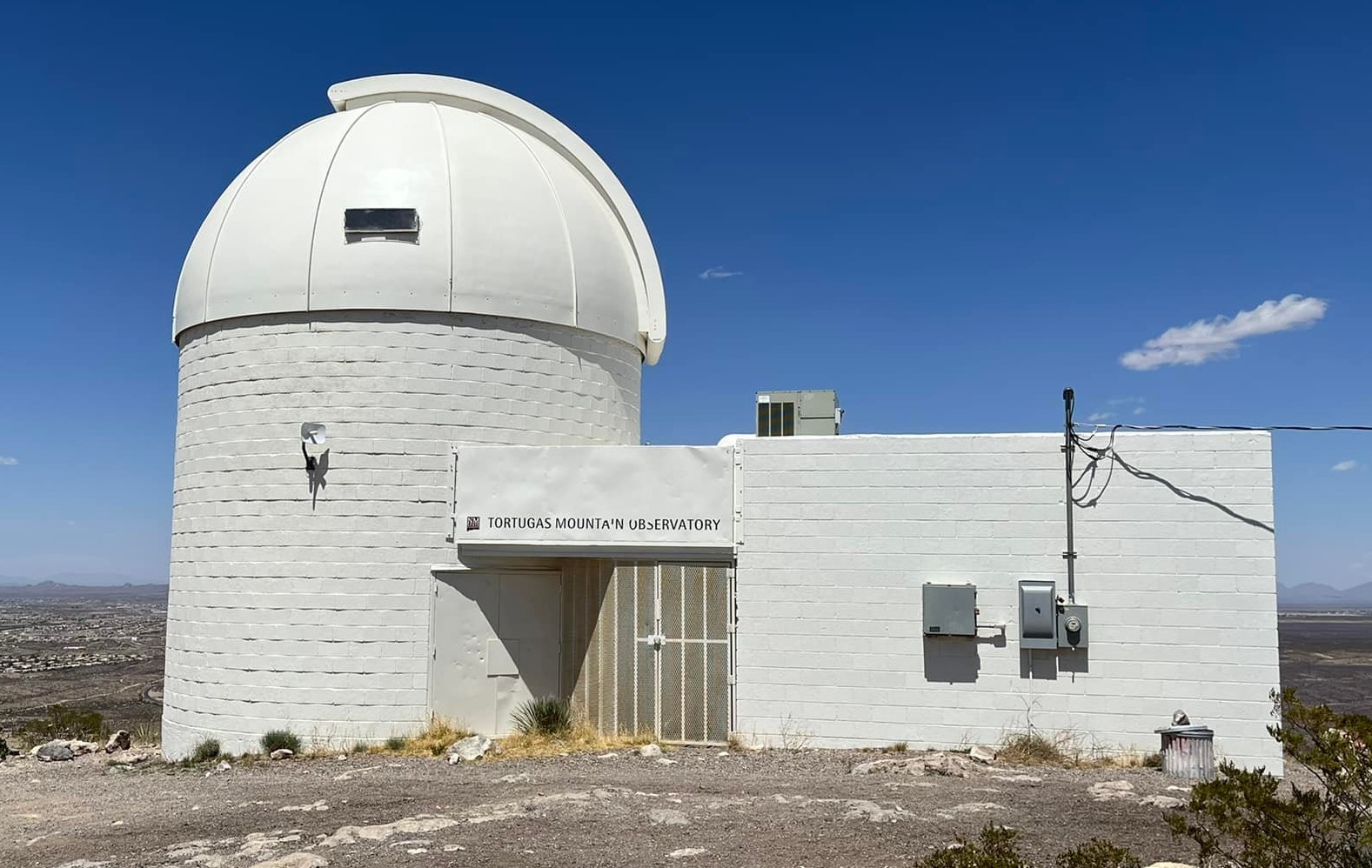 The Tortugas Mt. Observatory is located just east of Las Cruces, and
houses a 24-inch Boller and Chivens telescope (for some more information on
B&C telescopes, see [bollerandchivens.com](http://bollerandchivens.com
The telescope was built
in the late 1960’s and used extensively up until the early 90’s, mostly
for planetary monitoring. After that time, the telescope fell into
disuse, perhaps because the NMSU Department of Astronomy started to
operate the Apache Point Observatory, which is home to a set of significantly
larger telescopes.
The Tortugas Mt. Observatory is located just east of Las Cruces, and
houses a 24-inch Boller and Chivens telescope (for some more information on
B&C telescopes, see [bollerandchivens.com](http://bollerandchivens.com
The telescope was built
in the late 1960’s and used extensively up until the early 90’s, mostly
for planetary monitoring. After that time, the telescope fell into
disuse, perhaps because the NMSU Department of Astronomy started to
operate the Apache Point Observatory, which is home to a set of significantly
larger telescopes.
Starting in 2010, NMSU entered into a MOU with the American Association of Variable Star Observers to get the telescope back into operation again. This involved significant technical upgrades to the telescope, but the process went well.
Since the renovation, the telescope has been used for remote open houses, observing for undergraduate classes, and by the Summer Science Program since they started an astronomy program at NMSU in 2023.
NMSU article about the telescope renovation
Video of NMSU Engineering staff and students about the renovation project
2008 photos of the observatory
SONG at Apache Point Observatory
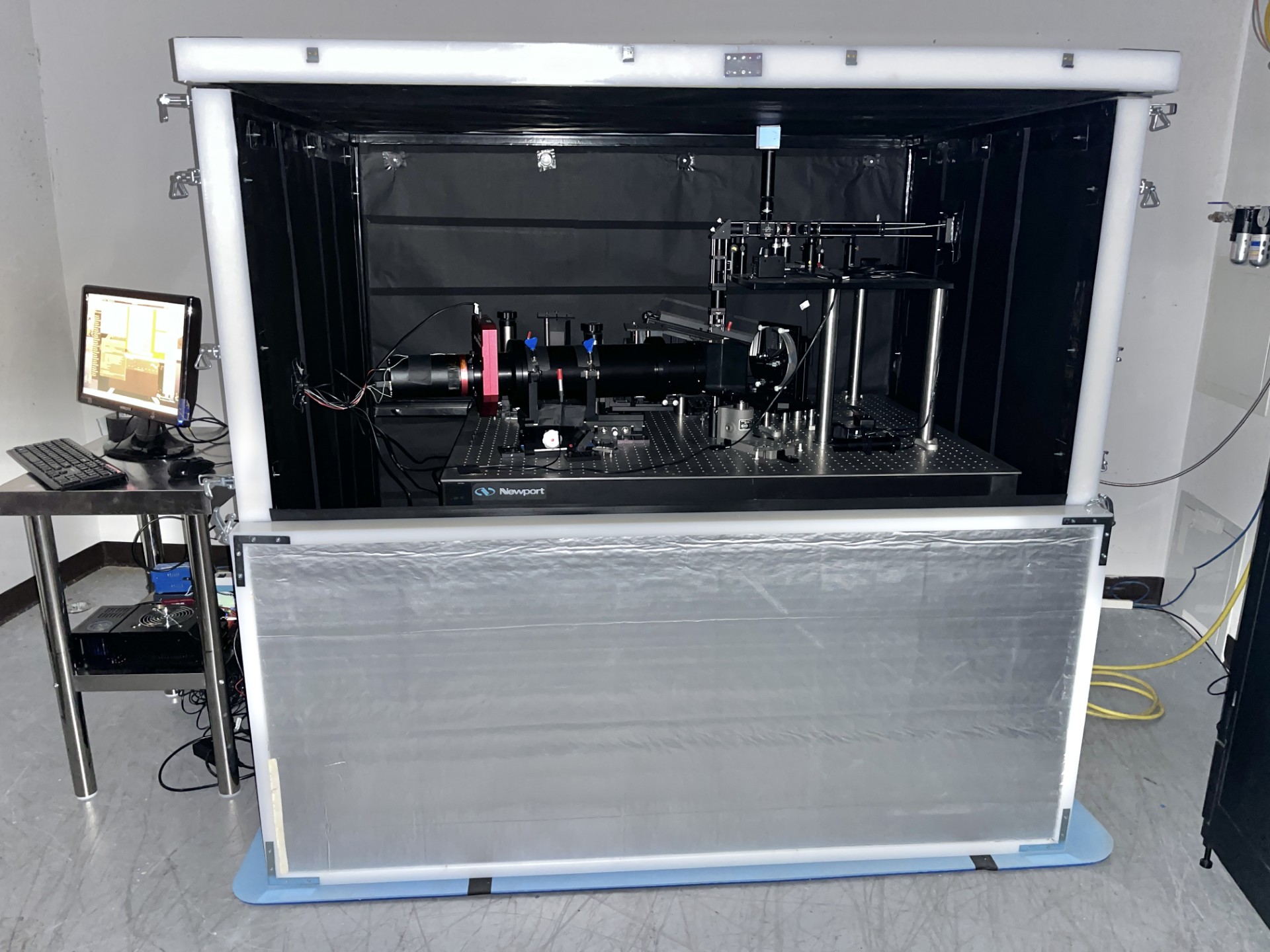 NMSU was funded by the National Science Foundation to build a SONG
node at APO. We purchased a Planewave
1m telescope and constructed a high resolution, fiber-fed spectrograph
based off an existing design. I have developed a full suite of
software to allow robotic operation of the facility and coordination
with the SONG network.
NMSU was funded by the National Science Foundation to build a SONG
node at APO. We purchased a Planewave
1m telescope and constructed a high resolution, fiber-fed spectrograph
based off an existing design. I have developed a full suite of
software to allow robotic operation of the facility and coordination
with the SONG network.
SONG is an international project led by Aarhus University in Denmark to study stars, predominantly through the measurment of stellar osciallations via spectroscopy. Given the low amplitude of oscillation signatures, observations over a long period of time are required, and minimizing aliasing from daily observing windows is important. As a result, the SONG project is trying to establish a world-wide network to enable quasi-continuous observations. The first node was constructed in Tenerife, Spain, with a second node at Mt. Kent in Australia. New nodes are under construction in New Mexico (near operational status!) and in China.
Apache Point Observatory
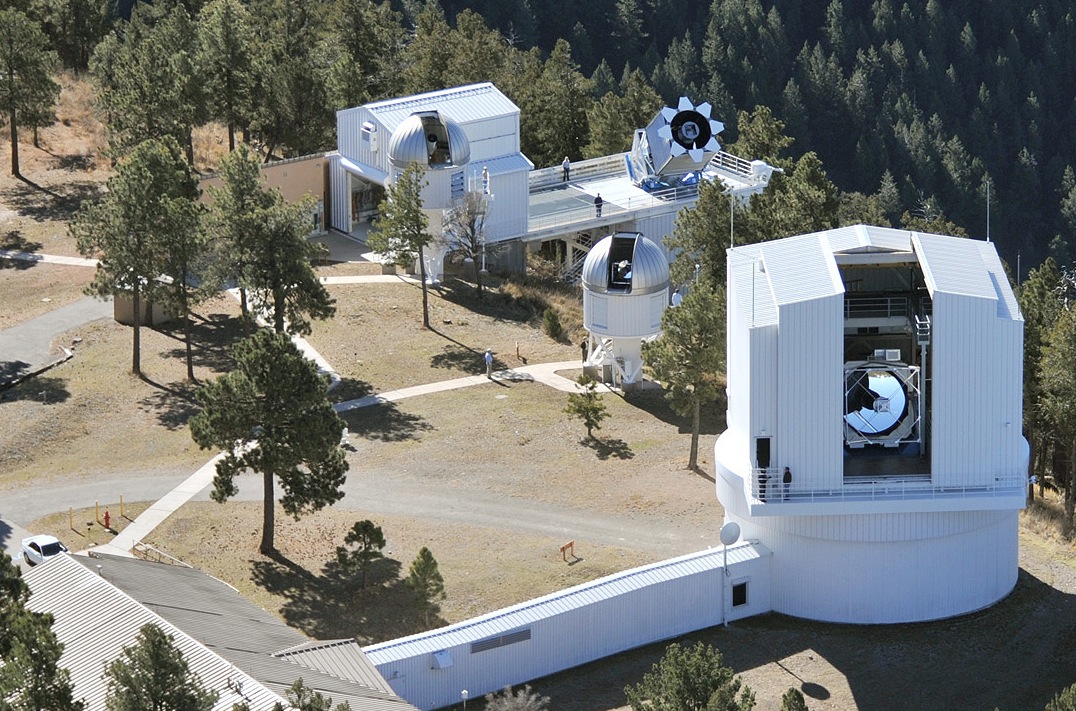 Apache Point Observatory (APO). NMSU has
a 15% share of the 3.5m telescope. I have served as the Project
Scientist for the 3.5m. I helped with projects involving construction
of a slit viewing camera for the (now retired) Double Imaging
Spectrograph, and on getting a replacement grating for the ARC
Echelle Spectrograph. I’ve also developed software for reducing
data from all of the 3.5m instruments, and am working on getting
reduction for these instruments implemented into PypeIt.
Apache Point Observatory (APO). NMSU has
a 15% share of the 3.5m telescope. I have served as the Project
Scientist for the 3.5m. I helped with projects involving construction
of a slit viewing camera for the (now retired) Double Imaging
Spectrograph, and on getting a replacement grating for the ARC
Echelle Spectrograph. I’ve also developed software for reducing
data from all of the 3.5m instruments, and am working on getting
reduction for these instruments implemented into PypeIt.
NMSU 1m
Before SONG, NMSU operated another 1m telescope at APO. I spent a large amount of time getting this telescope to work! I had it runnning in a fully robotic mode, with fiber feed to the SDSS APOGEE instrument; it was used for photometric monitoring of various variable stars, supernovae followup, etc.
Heliostat at Sunspot Solar Observatory Visitors Center
A fun project since retirement has been to get the heliostat located outside the Visitor’s Center functional again. This feeds a display inside that projects an image of the Sun on a physical screen, and also makes a visual image of the solar spectrum that visitors can explore by moving to see different parts of the spectrum …. including a lot of absorption lines!